Wednesday, January 14, 2015

Making ends meet

You know that saying "When you make ends meet, they move the ends"?  Or "why is there always so much month left at the end of my money"?  For many people, not making enough is a harsh reality.


A reality that became mine after getting out of the Air Force.  For eight years, I made more than I needed, and managed to save a bunch, so I am technically not in the same boat as the individuals described above.

However, my income is currently woefully inadequate.  I got hired on by UPS at the beginning of December, and I've been making $750 a month.  Fortunately, my recurring expenses are low, but there are always unexpected ones.  The last time I was in this boat was in 2005, when I was making about the same, and I thought how wonderful it would be if I could just make enough to have a bit left over after paying all the bills.

I now find myself calculating mileages, between work and home, and other locations I frequent, such as the gym, to see whether it would be better to go home for free dinner after school, or get something off the dollar menu at McDonalds before going to work.

The silver lining is that I do have money I can draw from, though I'm staunchly resolute not to do so unless it can't be helped; and also, there will be future opportunities to move up at work, and regular (shitty) raises.  A couple of weeks after I started, I found out that if I memorized a bunch of zip codes, I'd have an opportunity to do a job paying me a dollar extra an hour, which may not seem like much, but everything adds up.  So I took the test and I'm currently making $11/hr.

As soon as they let me, I'll be applying for a management position, and at that point I'll be making enough to start being able to put extra money away in my retirement accounts again.

Fortunately, the military is paying for my books and tuition, but parking at the college is fucking ridiculous.  Last semester, I paid $338 for parking.  That breaks down to over $21 a week.  And I was only there twice a week.

Anyway, I'm thankful I actually have a job, financial knowledge, and a solid nest egg.  So many others don't.

Friday, December 26, 2014

Traditional or Roth?

If you work for a company, chances are they offer a 401(k) retirement plan.  Some companies even offer a Roth 401(k).  Or maybe you're just looking at a traditional IRA vs a Roth IRA and don't understand the difference or which one you should invest in.

Yeah I ended that sentence in a preposition.  Big whoop, wanna fight about it?
In a nutshell, when you invest in the traditional 401(k), IRA or TSP it's done with pre-tax dollars, and you're taxed on the money when you withdraw it in retirement.  These plans have two benefits:

1) They reduce your taxable income.
2) More money gets invested earlier, and the returns compound.

Let's say you make 50,000 a year and contributed the maximum of $18,000 for 2014.  If you hadn't contributed, you would have paid over $5800 in taxes.  The contribution brings your taxable income down to $32,000, on which you would have paid $2800.  That $3000 difference would be invested and would go out to work for you.

For the Roth, you would be taxed on the entire $50k, but all the gains you earn on any money invested would be completely tax free when you withdraw in in retirement.  Let's say you invest $100 at 25, and withdraw that money at age 65 plus the approximately $2600 that the stock market would have made for you over 40 years.  The entire $2700 is tax free.

To know which type you should invest in, you need to ask yourself one question: Will your tax bracket be higher or lower in retirement than it is now?

If it's higher in retirement, you should put your money in a Roth.  If it's lower, you should invest in the traditional.  Of course, we have no way of knowing what the government will do decades from now, but you can probably estimate.  Generally, most people benefit from the traditional TSP, IRA or 401(k).  Two notable exceptions are people with low income and military folks.

If you're in the military, chances are you'll get deployed, and when you do, all the money you earn is tax free.  You would be better off putting that money into a Roth.  The Thrift Savings Plan offers a Roth version, so I'd recommend opening one of those vs the traditional.  Unless you know you'll never get deployed, in which case the traditional is better.  Or you may be able to open both, and allocate your money accordingly.

Of course, the best course of action would be to max out both accounts.  $18,000 for a 401(k)/TSP and $5,500 for a (Roth) IRA, but many people can't do that, so what you could do is just split your money between the traditional and Roth.

Tuesday, December 16, 2014

How to get out of (credit card) debt

Congratulations.  You're probably reading this because you realized you had an issue with debt and googled the phrase (or I kept sending you the link until you clicked on it).  Either way, you want to do something about it.  And much like the platitudes they spew at your AA meetings, the first step to recovery is admitting there's a problem.

So let's get into it.  I'm going to assume you're an Average American, and have a mortgage, a car loan, student debt and half a dozen credit cards, all of which have varying interest rates which you don't want to think about.

Pictured: the average American.  We'll call him Joe
You'll need to get a list of your debts that contains the amount owed, the minimum payments and what the interest rate is.  I'll use an example.  Here are a list of debts that Joe has:

Mortgage: 200k, 1200, 3.5%
Car:          20k, 300, 6%
Capital One: 4000, 70, 22%
Discover:   2000, 30, 17%
Amazon: 5000, 50, 0% until May of next year, when it becomes 26%
Personal loan from the bank to buy a Rascal scooter: 700, 20, 12%
Loan from Bob: 4000, N/A, 0%

You'll notice the last one is an interest-free loan that Joe got from Bob.  Bob hasn't set a monthly payment and isn't charging Joe interest and has told him to pay him back "whenever."  Make no mistake; Bob is generous, and Bob is patient, but Joe does need to pay him back.

So in your case, here's the plan: 

1) Make a list

2) See how much money you have left over every month after paying for the basics; mortgage, car, utilities, gas, groceries, etc.  For this scenario, let's pretend you have $500 you can use toward paying for your credit cards and other loans.  The minimum payments you MUST make in order not to default are $170 (70 + 30+ 50+ 20), which means you have $330 you can use to get out of debt faster.  Let's also make a minimum payment to Bob, say $30 a month.  That leaves $300 extra.

3) Put the entirety of that $300 toward the highest interest loan first.  In this case, the highest is the Capital One card, at 22%.  Now this is important.  I know it would be nice to pay off the lowest balance first, such as the bank loan since it's only $700, but the longer you neglect the higher interest rates, the more interest will accumulate. So you'll be putting $370 towards the Capital one card every month until it's paid off ($70 minimum plus the extra 300 you're using to get out of debt faster)

4) Once that card is paid off, use the extra $370 to pay down the next highest interest.  And so on.

5) Now let's pretend it's the following May, and that 0% interest Amazon card starts charging you 26%.  In this case you'll start moving all extra money towards that one.  Even if you're not done paying off the previous highest interest card.  But remember to keep making minimum payments on everything else.

Alternatively, you could take out a loan that consolidates all of your credit card debts into one handy loan, but you'll have to calculate whether it's worth it.

And that's about it.  Good luck.  Email me if you have any questions.

Friday, December 12, 2014

Don't panic

The stock market has taken a precipitous dive in the last few days, which leaves many people worried about their money and causes some to try to cut their losses and get out as soon as they can.  The problem is; after the market drops, it's already too late.

In this week's episode of 'Ow My Balls'

The price of a stock (and that of the market as a whole) is basically driven by buyers of stocks.  The biggest investors are fund managers, who have to try to make a profit no matter what the economy looks like.  The market drops when these people sell their stocks, due to sheer volume.

This is a quote I got from an article in the Wall Street Journal today: "Worried that the slowdown could spill over into the U.S., money managers on Friday sold stocks and piled into relatively safe assets such as Treasurys."


Now, you are probably not a fund manager.  You're not under pressure to make a profit every quarter.  You are in it for the long term (and if you're investing for something less than 7-10 years, get out immediately and put your money in bonds, a CD or a high yield savings account).

All that being said, you can't time the market.  No one knows when it will hit its peak and when it will hit its bottom, so there is no use in waiting to sell until it's at the top, and keeping your money safe until the end of a crash, at which point you put your money back into the market, buying stocks when they're cheap.


Your best bet is to do something called Dollar Cost Averaging, which is where you invest a specific amount of money every month, no matter what is going on in the market.

Now, that's not to say there aren't opportunities to be had.  Crude oil is down something like 46% over the past few months.  There are many reasons for this; shitty economies in foreign countries, Russia being stubborn, and OPEC trying to drive US shale companies out of business, to name a few, but I think we can all agree the demand for oil won't be going down for the foreseeable future, not until renewable energy becomes more affordable and ubiquitous.  And the global supply is going down.  Current production levels be damned.

Fund managers are getting rid of oil stocks like they have Ebola, because in the short term, they will lose a lot of money.  But for regular investors, whose time frame exceeds the next few quarters, now (or soon - I have no idea when oil will hit its bottom) is an amazing time to invest in oil.  Dollar cost average that shit.  If you have $5000 to spare, put $500 a month for the next 10 months, and watch your money multiply over the next few years.

So my advice here is:
1) Don't panic.  If you are itching to sell, it's too late.  Stick it through.  Maybe move your investments around a bit, but don't dump all your stocks.
2) When the money managers are panicking and selling all their stuff in one sector, that's the perfect time for the average investor to snap it up, because they just conveniently drove down the price for you.  Of course, be sure to do some research and check to see if the company is strong and will be viable for the future.

Saturday, November 29, 2014

TSP

If you're in the military (or in some other kind of government service), you will undoubtedly have been asked to contribute to the Thrift Savings Plan, or TSP.  Much like many other things government, the TSP is a three-letter agency.  And like most three-letter agencies, they can be pretty insistent.  My first experience was when I first came back to the US and armed TSP agents insisted on performing a "cavity search".  I was puzzled because they didn't go anywhere near my teeth.

Oh wait, that was the TSA
Just kidding.  The TSP is actually a retirement plan, exactly like a 401k, except you don't get matching contributions.  The point of this article is to tell you why it's an amazing idea.

Many people think that they can "time the market;" that is, sell stock when it's high and buy at the bottom of a crash, when prices are lowest and you can buy more shares.

Like so

In an ideal world, that would work, and we'd all be rich.  In reality though, people's emotions get the better of them and they tend to think rising stocks will continue forever (or that the crash will continue forever and you'll be left penniless).  Just look at the sub-prime housing crisis of the 2000s.

It's difficult to time the market.  What really matters is not timing the market, but rather time in the market.  The earlier you start saving and investing, the better off you'll be.  Einstein may or may not have once said that compound interest was the strongest force in the universe.  Check out the difference a few years can make.  The person on the left invested $5000 a year from age 25-35 and stopped contributing after that, and the person on the right invested the same amount for 25 years, and still ended up with less than the 25 year old.


It's been proven that people that actively trade to try and outperform the market tend to actually underperform over 80% of the time.  That means that you'd have a much better chance of making money by picking a bunch of stocks at random and leaving your money in there for 30 years than by buying/selling them regularly or handing the reins over to a hedge fund manager with a "proven strategy."

Now, I'm not saying that there aren't people who can outperform the market.  Almost one in five does.  I'm just saying that chances are, you (or the fund manager that convinces you to let them handle your money) won't be one of them.


Think about it.  These fund managers are the Rick Grimes' of the finance world.  They KNOW investing.  They have Master's degrees in Business, Finance and Economics.  And they STILL do worse than the market 80% of the time (over the long run).

Statistically, your best bet isn't to try to outperform the market, but give yourself every advantage you can by reducing fees.  Many actively managed mutual funds have annual fees of a percent or two.  That is, for every $1000 you have in the fund, they will take out $10-$20 annually.  Not of what you earned over the year, but of the entire amount.  Even if you lost money.


Over time, those fees eat away at your earnings, and could have been making you more money instead of lining the pockets of some banker.  Your best bet at getting the money high score is to invest in things like low-fee index funds.  The best ones I've found are from Vanguard.  They charge anywhere from 0.09% to like a quarter of a percent, which isn't bad at all.

Now we come to the whole point of this article.  The TSP charges 0.02% annually.  That's twenty cents for every thousand dollars invested.  That's virtually non-existent.  So if you're not doing so already, fund your TSP.  Put away as much money as you possibly can, and future you will thank present you for it.  Fees aside, a 401k plan (or TSP in this case) is tax-deferred.  That is to say, you won't pay taxes on money you put in until you retire.  That gives you an extra 15-35% (depending on your tax bracket) that you can have earning money for you.  Let's pretend you make $50,000, and put in the 2015 maximum of $18,000.  Not only are you paying taxes on just $32,000, but you're in a lower tax bracket, AND saving more for down the road.
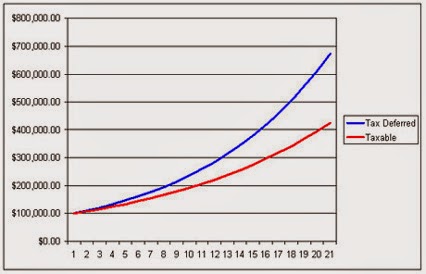

The tone of this article may suggest that you should buy and hold forever.  I am not actually suggesting that.  Regular checkups (maybe once a year) are in order.  There is some buying and selling that needs to be done, and re-weighting of your portfolio.  That means that if you have your net worth divided up evenly (25% each) between US stocks, international stocks, bonds, and precious metals, after a year of stock market fluctuations, the allocation is going to be different.  That's when you sell any excess in one area and put that money in the portion that went down.  For example, if US stocks now represent 35% of your portfolio (up from 25% a year ago), and your bonds are at 15%, you sell 10% of stocks, and use that money to buy more bonds, bringing balance back to the Force.

The TSP has several funds.  Unless you specify otherwise, your contributions will go into the G Fund, which doesn't really earn you anything, but never goes down, so it's great during a recession.  The best site I've found so far for the TSP is called TSPallocation.com.  The author has done his research and switches his money between the funds depending on what phase of the business cycle we're in.  There's a lot of financial mumbo jumbo you're probably not interested in, but he has his current recommendation right at the top of the page, so I'd suggest a visit right after funding your TSP.

EDIT: If you have another job outside of the military, say you're in the National Guard and make like $5,000 a year, you can also have a 401k with your other job.  In this case, I would suggest putting all of your military money ($5,000) into the TSP, and then funding your 401k with the rest of the maximum contribution (18,000 - 5000 = 13,000) into the 401k.  Then start funding your Roth IRA, only after you've maxed out your TSP/401k.

Tuesday, October 7, 2014

Internship

You know what I find funny?  How things that are done for one reason can end up having a completely different effect, or how something done for a completely selfish purpose can end up being lauded as altruistic.

I'm getting a degree in Finance at California State University, and since I knocked out all of my general education classes many times over during my stint in the military, all I have to complete are a few Pre-Business courses, and then I'll be able to start on the actual degree courses.  If all goes well, I'll graduate in 2017.  Maybe sooner if I can swing it.

Yup, I'm still in that hopeful, naive, oblivious freshman phase where I buy all the textbooks and actually study

Anyway, I'm currently in my first full semester.  During the first week of class, the accounting society at my school came into my class and asked people to join.  They said they had twice weekly meetings, and it was a great opportunity to network, and blah blah.  Truth is, I really didn't give a rat's ass about accounting, as I'm planning on becoming a financial adviser or something.  I kind of zoned out until they mentioned there'd be free food at each meeting.  The catch?  A $30 membership fee for the semester.  

A quick mental calculation told me that meant I'd be getting lunch for less than a dollar a pop for the entire semester.  Sign me up.

Believe me when I say my frugality (or being a cheap bastard, take your pick) was the ONLY reason I signed up.  But after I started going to the meetings, I found them remarkably useful.  They would have people in the industry come and talk about what they do and how to go about joining their company.

One such talk was from an energy utilities company, who discussed their internship program and invited people to submit their resume through the school jobs site.  I had mine on me, and in a moment of "what the hell, why not," I submitted it in 2 minutes, before the talk was even over, without really expecting anything to happen.  Though at that moment, I would have submitted my resume for the position of  Zoidberg if the argument were even remotely compelling.  

Indeed
Unexpectedly, yesterday, I got a call saying I had an interview the next day.  As an afterthought, right before I ended the call, I asked the caller what the attire would be.  "Business" she said.  "Like a button shirt?"  "No, at least a jacket and tie.  Nothing too fancy."  Well, since I didn't own a jacket, that  was still too fancy for me.  When I told her that, I could almost hear her eyebrows go up in surprise and disapproval, so I told her I'd go buy a suit.  Remember that one time I wrote about how I was growing up and needed to buy a suit?  (You should probably click on that link.  It's pretty decent and even opens up in a new tab.)

This is Bubbles, and he has a hoarse Canadian accent.  He likes Rush, kitties, weed and likker, and intones "de-cent" when he sees something he likes.  He also thinks the internet sorcery I used to make the link open in a new tab is swank as fuk  
Between when I wrote the article (seriously, click on it) and now, I have never actually got around to getting one.  Partly because I haven't really needed one so far, but mostly because I'm a cheap bastard and don't see the need to spend money where I don't have to.  That afternoon I went over to Joseph A Bank and spent $900 on a couple of suits.

When I showed up at the interview today, I spoke with a company rep in the lobby for about 15 minutes while the interviewers prepared for me.  She said it was commendable that I was applying for internships in my first semester in college and that most people don't think about it until a few months before graduation.  She said it was great that I was being so proactive.  I nodded and thanked her, and decided to leave out that the only reason I ended up there was because I was trying to save money on lunch.

I have no idea how the interview went, though I think it was ok.  This was my first interview ever (!), and I'll hear back from them in a couple of months if they liked me.  Then there'll be a second round, and if by some miracle I make it through the other 12 tests, I'll be interning with them for 3 months next summer, which would be chill.

As a final note, if you don't know who Bubbles is, I want you to do a couple of things for me:
1) Smack yourself.  Seriously.  Do it promptly and vigorously, so you know my displeasure
2) Go to Netflix and proceed to binge-watch all eight seasons of Trailer Park Boys.  Then follow that up with the movies and the holiday special
3) Thank me later.

Wednesday, August 20, 2014

Index funds

I try to keep an open mind in life; basically, as the facts change, my opinion changes.  Over the past few years, I've been studying investing and related topics, and believe me, there are thousands of people out there, each of whom claim to have found the secret to making it big in the stock market, and they all say everyone else has it wrong.  So far, the best advice I've found is from people who take a long term approach to it.  Basically, they say you need to do some research, put your money in a mix of stuff, and leave it there, for like 50 years, tweaking it every so often.  What you DON'T want to do is become a day trader; basically one of those people who makes money (or tries to, anyway) by buying and selling stocks, trying to capitalize on the fluctuations of the market.

On the surface, this looks like a good idea.  Buy a thousand shares of Apple stock at 10 am at $70 each, and sell them at 3 pm when they're at $71.  Hey, look at that, you just made a thousand dollars!  Not bad for a single day's work. But what happens if it goes down, to $69 a share?  You've just lost money.
Let's keep with the Apple theme, since it has the largest market capitalization in the world.  If you had invested money in Apple 10 years ago, in the summer of 2004, your money would have increased by over 4,200%.  That's 42 times what you put in.  $10,000 in Apple stock in 2004 would have turned into $429,786 today.  That's including the Great Recession.  Of course, this isn't typical.  Most stocks don't go up by that much, but what I want to impart to those who worry every time the market dips for a day or a week - Apple was down on almost half of the trading days during those ten years.

That's just like the stock market.  In the short term, it goes up and down randomly, but fortunately over time it goes up more than down, and money is made.

Now we get to the meat and bones of this article.  I recommend investing in index funds over individual stocks.  Feel free to skip this paragraph if you know what they are already, but for those who don't; they're a type of mutual fund that have most of the same stocks as an 'index', such as the Dow Jones or the S&P 500.  A mutual fund is a group of stocks you buy together, and the idea is that if one stock's price goes down, others rise in value, bringing up the value of the entire fund.  Here's how it works (borrowed from here):

Imagine you start with a $1.00 investment.  In any given year, your investment can go up by 30% or down by 10%.  It's essentially random, much like the flipping of a coin.  If the coin comes up heads, your investment goes up by 30%.  For tails, you lose 10%.  So after the first year (first coin flip), one of two things will happen:
- Your investment is up by 30% so you have $1.30
- Down by 10% so you have $0.90

Either way there's a 50% chance of it happening.

But if we split our money in half and add a second coin (a second stock), there are one of four possibilities:
- Two heads: both fifty cent chunks went up by 30%, making them worth 65 cents each, totaling $1.30
- Two tails: Both are down to 45 cents each, totaling 90 cents.
- One head, one tail: One half is worth 65 cents, the other is 45 cents, totaling $1.10
- One tail, one head: One half is worth 45 cents, the other is 65 cents, totaling $1.10

Now, each of these outcomes has an exactly equal chance of happening, 1 in 4.  But notice that in three of the scenarios, you earn money and in only one do you lose money.  Over time, flipping one coin or flipping both will give you the exact same long term returns: an average of 10% per flip.  But flipping both coins makes it much less volatile.

If two stocks can reduce the risk by that much, imagine what dozens, or even hundreds, could do!  That's essentially a mutual fund.  And I like index funds better because the fees tend to be lower.